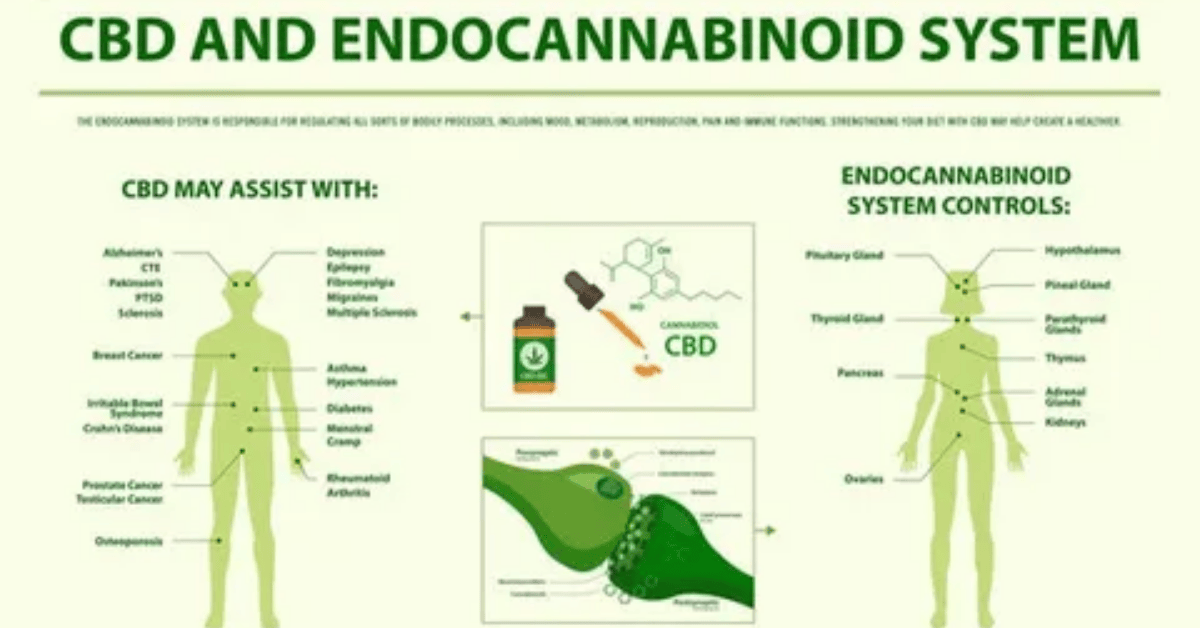

For years, people have talked about CBD as if it’s some kind of miracle compound. And in some ways, it does feel that way. But the truth is, CBD doesn’t work in isolation—it works because of something already inside us: the Endocannabinoid System.
Most of us never learned about this system in school. Even many health professionals overlooked it until fairly recently. And yet, it influences nearly everything: mood, sleep, appetite, stress levels, and even immune response. The more I dug into the CBD science, the more I realised how fascinating this “hidden” network is.
This article isn’t about selling you a product. It’s about showing how CBD interacts with the Endocannabinoid System, why that matters for health, and what researchers are still trying to figure out. We’ll explore the body receptors (CB1 and CB2), the connection to homeostasis, and even practical questions like whether CBD can support sleep or calm the nervous system.
ECS Explained: The Body’s Balancing Act
At its core, the Endocannabinoid System (often shortened to ECS) is about balance. Scientists call this homeostasis—the body’s ability to keep internal conditions stable even when the outside world changes.
You can think of it as a kind of internal traffic controller. When stress spikes, the ECS helps calm things down. When appetite dips too low, it nudges it back up. It’s not perfect, but without it, our internal signals would get messy.
The ECS consists of three main parts:
-
Endocannabinoids – natural chemicals your body makes.
-
Cannabinoid receptors – CB1 and CB2, found throughout the body.
-
Enzymes – responsible for breaking down endocannabinoids once they’ve done their job.
That’s the ECS explained simply. But of course, the real story is much richer.
CB1 and CB2: The Receptors That Matter
The cannabinoid receptors are where the magic happens.
-
CB1 receptors are concentrated in the brain and central nervous system. They influence mood, memory, and perception.
-
CB2 receptors are spread throughout the immune system and peripheral tissues, often connected to inflammation and immune response.
When THC binds to CB1, it triggers psychoactive effects. CBD, however, interacts differently. Instead of binding directly, it modulates. It influences the receptors without fully locking in. That’s why many describe CBD’s role as subtle—like adjusting the volume rather than turning the music on or off.
If you’ve ever wondered how CBD works, it’s mainly through this modulation of the Endocannabinoid System, helping your body use its natural cannabinoids more effectively.
CBD Effects on the Body: More Than Just Calm
People often think CBD is only about relaxation. But its impact on the Endocannabinoid System is broader.
-
ECS and sleep: Some users report deeper, more restful sleep after using CBD. It doesn’t sedate like traditional sleep aids—it supports the body’s natural rhythms.
-
ECS and mood: By interacting with serotonin receptors in addition to the ECS, CBD may promote emotional balance.
-
Immune system CBD: Through CB2 receptors, CBD appears to influence inflammatory pathways. Research is ongoing, but the potential is clear.
-
Nervous system CBD: Scientists are also studying CBD’s effect on neural excitability, which could explain its role in stress reduction.
The key here isn’t that CBD forces these changes. Rather, it nudges the wellness system back toward plant-based balance.
The Role of Homeostasis
Everything about the Endocannabinoid System ties back to homeostasis. It regulates signals to keep the body from tipping too far in any direction. Too much stress? The ECS tries to bring you down. Too little appetite? It gives you a boost.
CBD’s interaction here is subtle but important. Instead of creating balance artificially, it helps your body strengthen its own balancing tools. It’s like a coach guiding the system rather than stepping in to play the game.
Hemp Interaction and Plant-Based Boosts
Here’s a curious thing: our bodies don’t only rely on internal cannabinoids. Plant-derived cannabinoids (like CBD from hemp) can also interact with the Endocannabinoid System. That’s why the natural cannabinoid boost from hemp feels supportive.
Hemp contains dozens of compounds that work together. Some researchers suggest the presence of terpenes and minor cannabinoids amplifies CBD’s effects. This is where “full-spectrum” products come into play. They’re not just CBD—they’re a symphony of compounds that engage the ECS more holistically.
If you run a cannabis or hemp brand, creating educational pages about these synergies can be a decisive move. For example, Cannabis Content 2025: Build SEO Hubs That Outrank shows how well-structured guides can both inform users and rank well.
ECS Modulation: Why It Matters
When people talk about ECS modulation, they’re describing how substances like CBD adjust the system’s responsiveness. Instead of overloading the receptors, CBD helps prevent the breakdown of your natural endocannabinoids. This prolongs their action, making your ECS more efficient.
That efficiency matters. It’s the difference between feeling burned out after stress and bouncing back more quickly.
The ECS and Wellness Trends in 2025
In 2025, wellness conversations almost always include CBD. But unlike a fad, this one has real biological grounding. The Endocannabinoid System is backed by decades of research, even if much of it is still in early stages.
Wellness brands, particularly dispensaries, are emphasising education. SEO strategies, such as Dispensary SEO 2025: Boost Local Map Rankings & Traffic, show that customers respond well when brands clearly explain the ECS. Similarly, targeted ads (see Cannabis PPC 2025: Ads That Lower Costs & Win Clicks) often work best when they highlight CBD’s interaction with the ECS, not just vague promises.
Debunking Common Myths About the ECS
Let’s be honest: the Endocannabinoid System isn’t widely understood, and myths pop up everywhere.
-
Myth 1: The ECS is only about cannabis.
Actually, it existed long before we discovered CBD or THC. Cannabis just happens to interact strongly with it. -
Myth 2: CBD works instantly on the ECS.
Some people feel the effects quickly, but for others, it builds gradually. -
Myth 3: Everyone has the same ECS response.
Not true. Genetics, diet, stress levels—all shape how your ECS reacts.
Clearing up these misconceptions helps consumers make smarter choices. Educational blogs (like CBD Social Media 2025: Instagram & TikTok Growth Hacks) often gain traction by breaking down these myths in plain language.
Using CBD for ECS Support
So, should you use CBD to support your Endocannabinoid System? For many, the answer is yes, but with context. CBD isn’t a cure-all. It’s a tool that interacts with a pre-existing system.
People often pair CBD with lifestyle changes—such as better sleep routines, mindfulness, or exercise—to create a stronger foundation for ECS support. Businesses, too, are recognising this, using educational landing pages like Cannabis Landing Pages That Convert Ad Clicks to Sales to guide users toward informed choices.
Key Takeaways
-
The Endocannabinoid System regulates balance, mood, sleep, and immune response.
-
CBD interacts mainly by modulating receptors, especially CB1 and CB2.
-
Supporting the ECS isn’t about quick fixes—it’s about homeostasis and long-term balance.
-
Hemp provides a natural boost of cannabinoids that works in harmony with our internal systems.
-
For businesses, content and SEO strategies (like Weed Delivery SEO 2025) prove how education builds trust and growth.
Final Thoughts
The Endocannabinoid System might just be the most important health system you’ve never heard of until recently. In 2025, awareness is growing, but confusion still lingers. CBD doesn’t hijack this system; it partners with it. By gently nudging receptors, slowing enzyme breakdown, and amplifying natural signals, CBD encourages balance where it’s needed most.
Whether you’re exploring CBD for sleep, mood, or just general wellness, it helps to remember this: the ECS was built into you long before CBD products hit the market. And the more we learn, the clearer it becomes that supporting this system—through CBD, hemp, and smart lifestyle choices—can help us all function a little more smoothly.
FAQs
1. What is the Endocannabinoid System?
It’s a network of receptors and chemicals in the body that regulate balance (homeostasis).
2. How does CBD interact with it?
CBD modulates receptor activity and prevents breakdown of natural endocannabinoids.
3. Does CBD affect sleep through the ECS?
Yes, many believe CBD supports the ECS and sleep, helping restore natural rhythms.
4. Is the ECS only about cannabis?
No. It’s part of your biology. Cannabis just happens to interact strongly with it.
5. Can supporting the ECS improve overall wellness?
Potentially, yes. Many people report better mood, sleep, and stress resilience when their Endocannabinoid System functions smoothly.